
Joint statement from Somali Diaspora Advocacy Working Group SDAWG, International Relief Foundation (IRF) and Restore Somalia Foundation urges immediate release of anticipatory action funding, coordinated donor and government preparedness, and protection for riverine communities ahead of the October–December rains.
13 August 2026 — The Somali Diaspora Advocacy Working Group (SDAWG), International Relief Foundation (IRF), and Restore Somalia Foundation are joining forces to strengthen El Niño preparedness and early action ahead of Somalia’s October to December Deyr rainy season. The organisations are calling for the urgent release of anticipatory funding and coordinated preparedness action, as climate forecasters indicate a greater than 90 percent likelihood of El Niño conditions this Deyr season, raising the risk of heavy rainfall, riverine flooding along the Juba and Shabelle river basins, and flash floods in vulnerable areas of Somalia.
Recognising the potential for El Niño-related climate variability to intensify risks associated with flooding, drought, displacement, food insecurity, disease outbreaks, and loss of livelihoods, the three organisations are committed to supporting Somali communities with timely information, preparedness measures, and locally led solutions.
This joint initiative is guided by a shared commitment to ensuring preparedness precedes crisis, enabling communities, local authorities, humanitarian actors, and the Somali diaspora to work together to reduce risks and protect vulnerable populations.
The warning, issued by the FAO’s Somalia Water and Land Information Management unit (SWALIM), citing the IGAD Climate Prediction and Applications Centre, comes as Somalia is already contending with one of its most severe humanitarian crises in years. According to the February 2026 IPC analysis, 6.5 million people are experiencing Crisis-level food insecurity or worse, including 2 million in Emergency conditions, with 1.8 million children aged 6-59 months at risk of acute malnutrition. OCHA reports that 4.8 million people will require humanitarian and protection assistance in 2026, yet the $852 million Humanitarian Response Plan is only 15 percent funded.
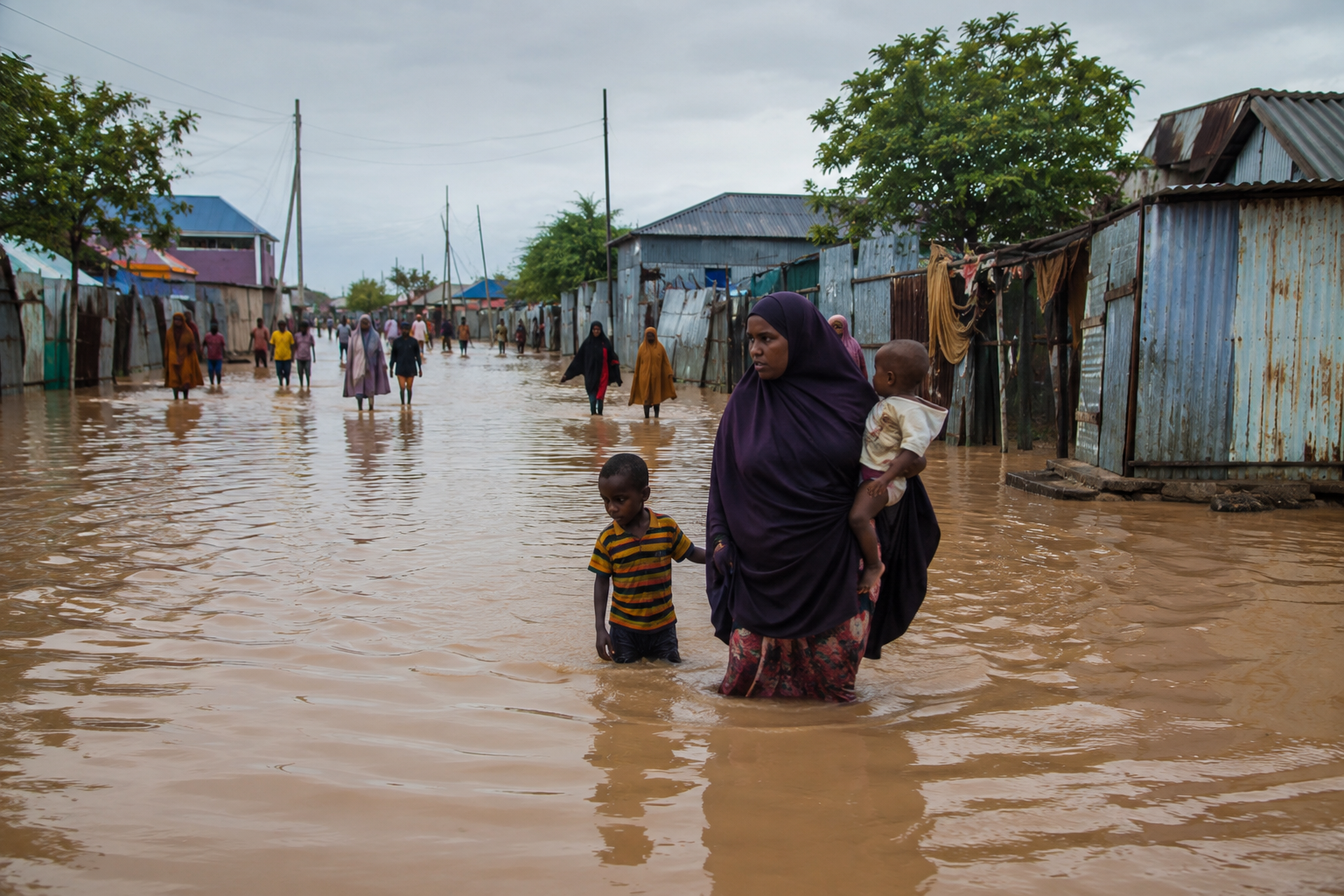
Flash flooding has already struck ahead of the Deyr season: in the Tougher region, floods in Buuhoodle killed two people, injured 25 others, and displaced more than 250 families, while in the Galgaduud region, floods killed approximately 6,000 livestock and affected some 500 pastoralist families in Baraag Abdille. Humanitarian agencies warn that a repeat of the scale of flooding seen in late 2023, when more than 2.5 million people were affected and at least 1.5 million hectares of farmland inundated, would strike communities with even less capacity to absorb the shock.
Through this partnership, SDAWG, IRF, and Restore Somalia Foundation are calling for:
- Immediate release of anticipatory action funding through the Somalia Humanitarian Fund and the UN Central Emergency Response Fund, disbursed ahead of the Deyr onset rather than after flooding occurs, consistent with the early-action model that reduced losses during the last El Niño cycle.
- Coordinated preparedness between the Federal Government of Somalia, Federal Member State authorities and international donors, including activation of early warning systems, river-level monitoring, and prepositioning of shelter, sandbags and flood-protection materials in Hirshabelle, Jubaland and other historically flood-exposed regions.
- Protection and support for internally displaced people, riverine and pastoralist communities already weakened by drought, food insecurity and loss of livelihoods, including safeguards against further displacement, disease outbreaks such as cholera, and further livestock and crop losses, with particular attention to children, women, and persons with disabilities.
“Somalia is being asked to absorb a second climate shock before it has recovered from the first. The funding mechanisms and the early warning systems exist, what is missing is the will to act before the rains arrive rather than after. We are calling on donors and the Federal Government to treat the coming weeks as the window for action, not the aftermath as the moment for response,” said Rashid, Director, Somali Diaspora Advocacy Working Group.
“Preparedness must begin before a crisis reaches its peak. Early action, strong coordination, and timely support can save lives, protect livelihoods, and reduce the humanitarian cost of climate-related disasters,” said Hamza Mohammed, Chief Executive, International Relief Foundation.
“Our visits and conversations with communities affected by the 2023 El Niño floods, particularly in Southwest State, showed us that issuing an early warning is not enough. Information must reach people through trusted local channels, in languages and formats they understand, with practical steps they can act on. Restore Somalia Foundation is committed to working directly with internally displaced families, women, young people and local leaders to strengthen community preparedness before the Deyr rains begin,” said Hani Mohamed, Executive Director of Restore Somalia Foundation.
SDAWG, IRF and Restore Somalia Foundation will continue to monitor the SWALIM river-level forecasts, SoDMA, ICPAC, and other relevant authorities through the Deyr season and will issue further updates as anticipatory action thresholds are reached.
Media Contact
Rashid, Director, Somali Diaspora Advocacy Working Group
gaalrash@sdawg.co.uk · +44 7497 404 342